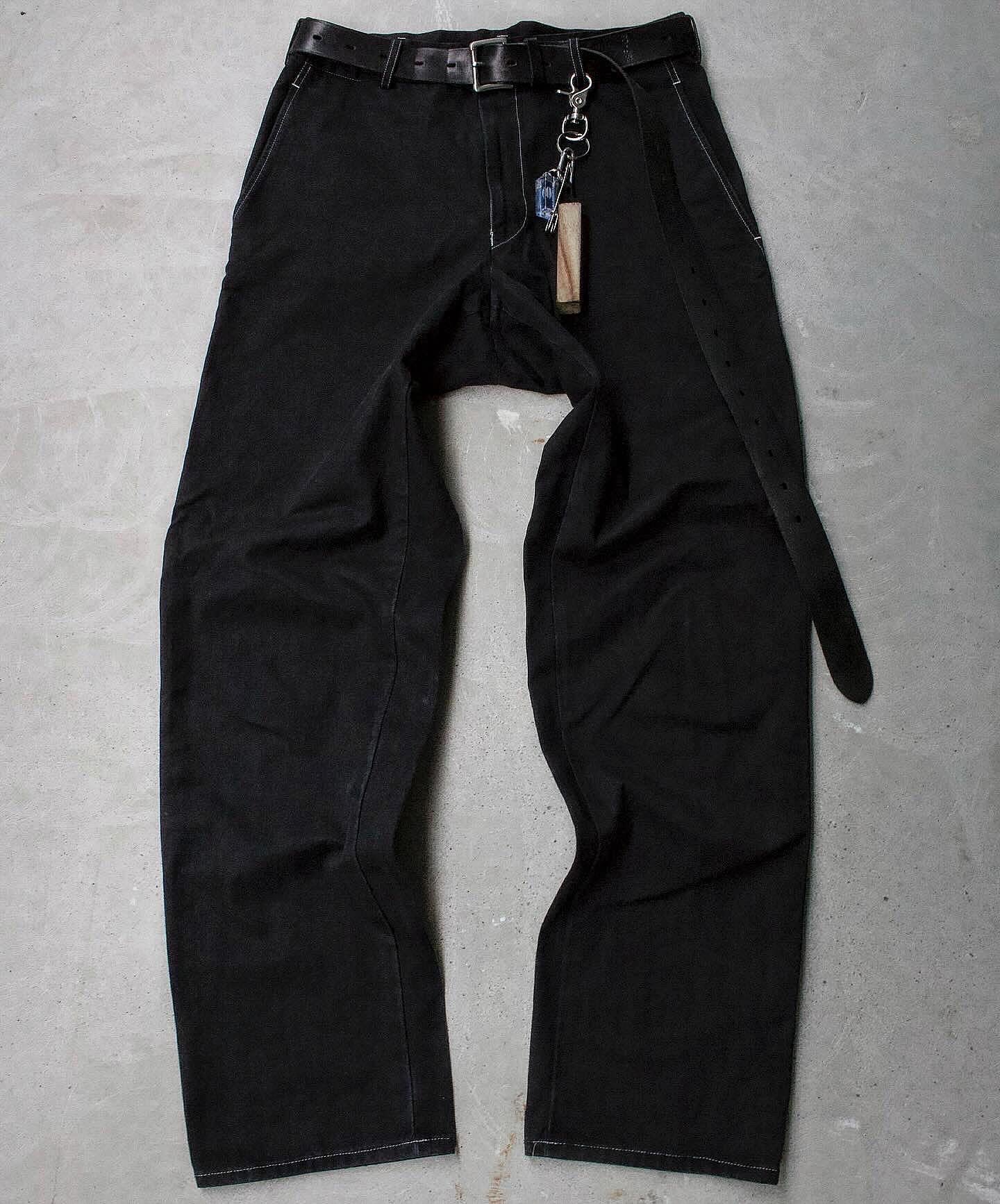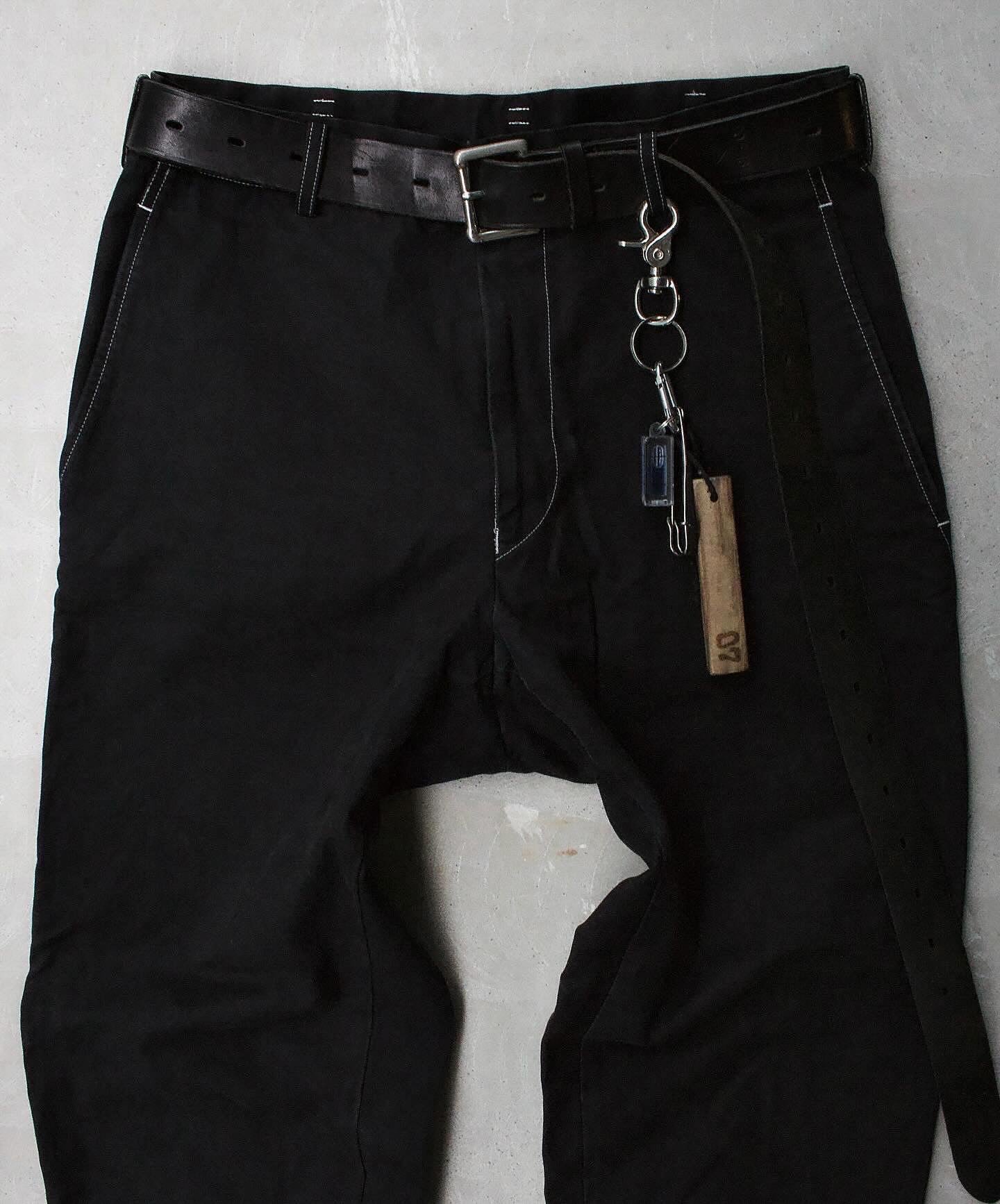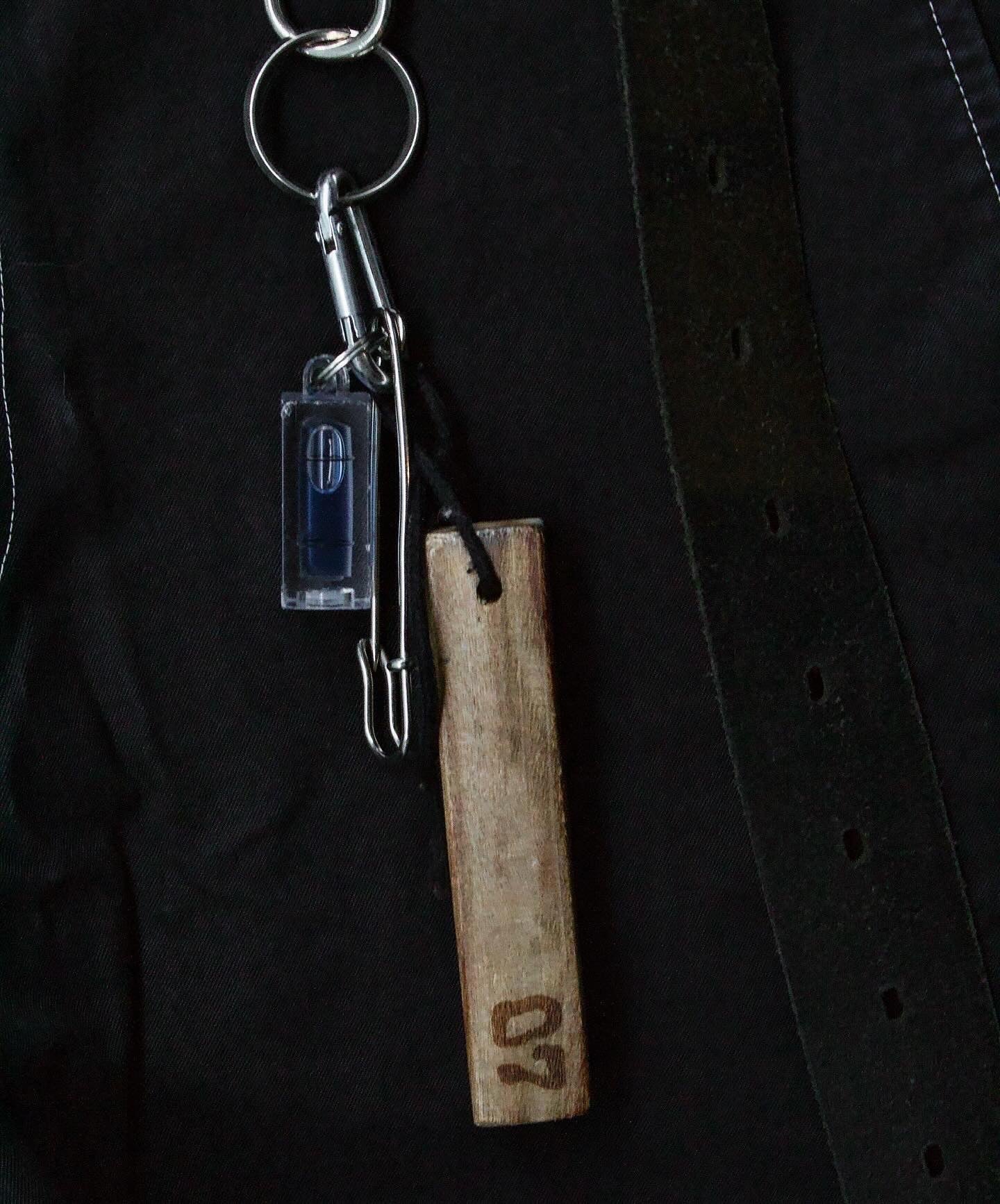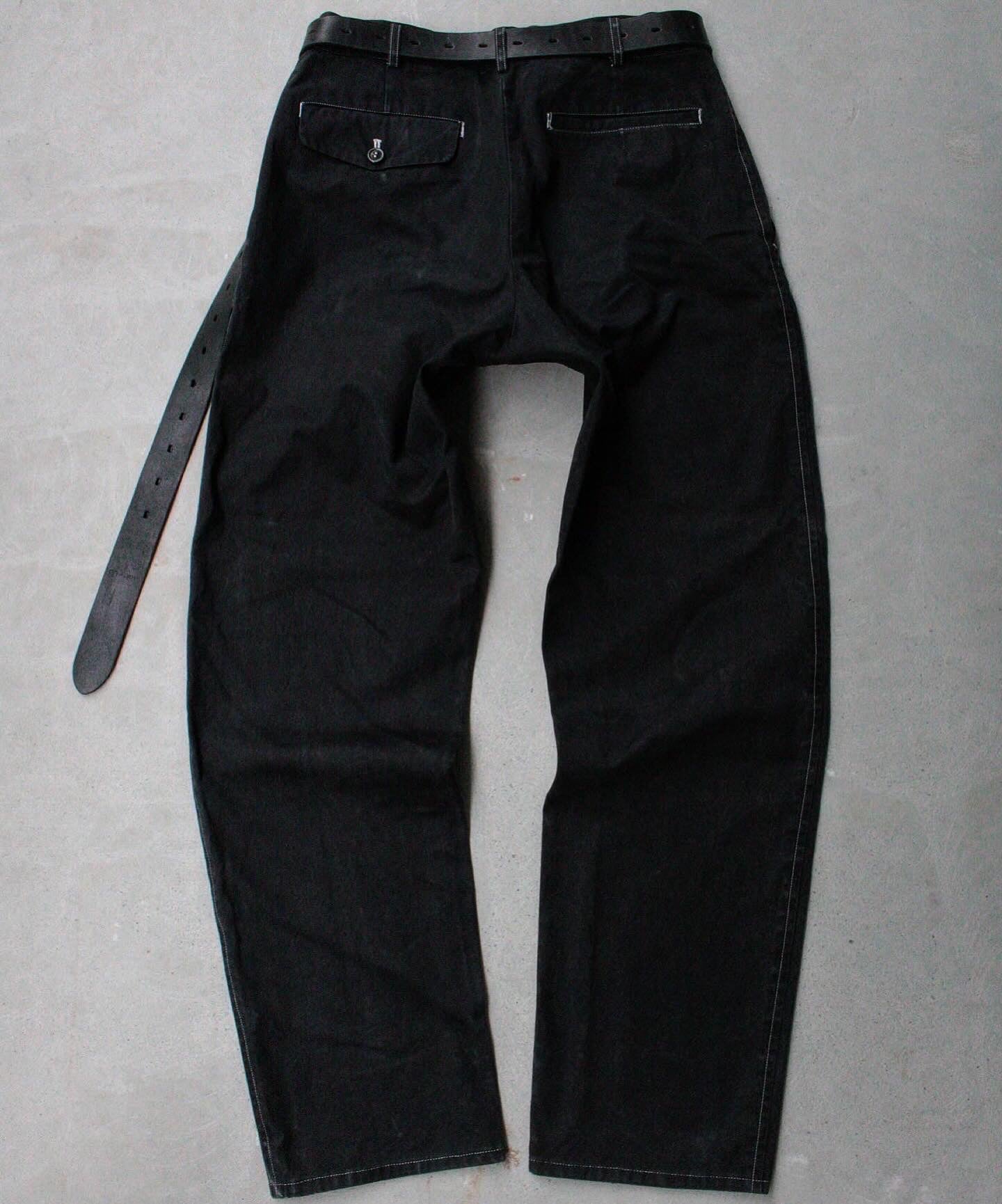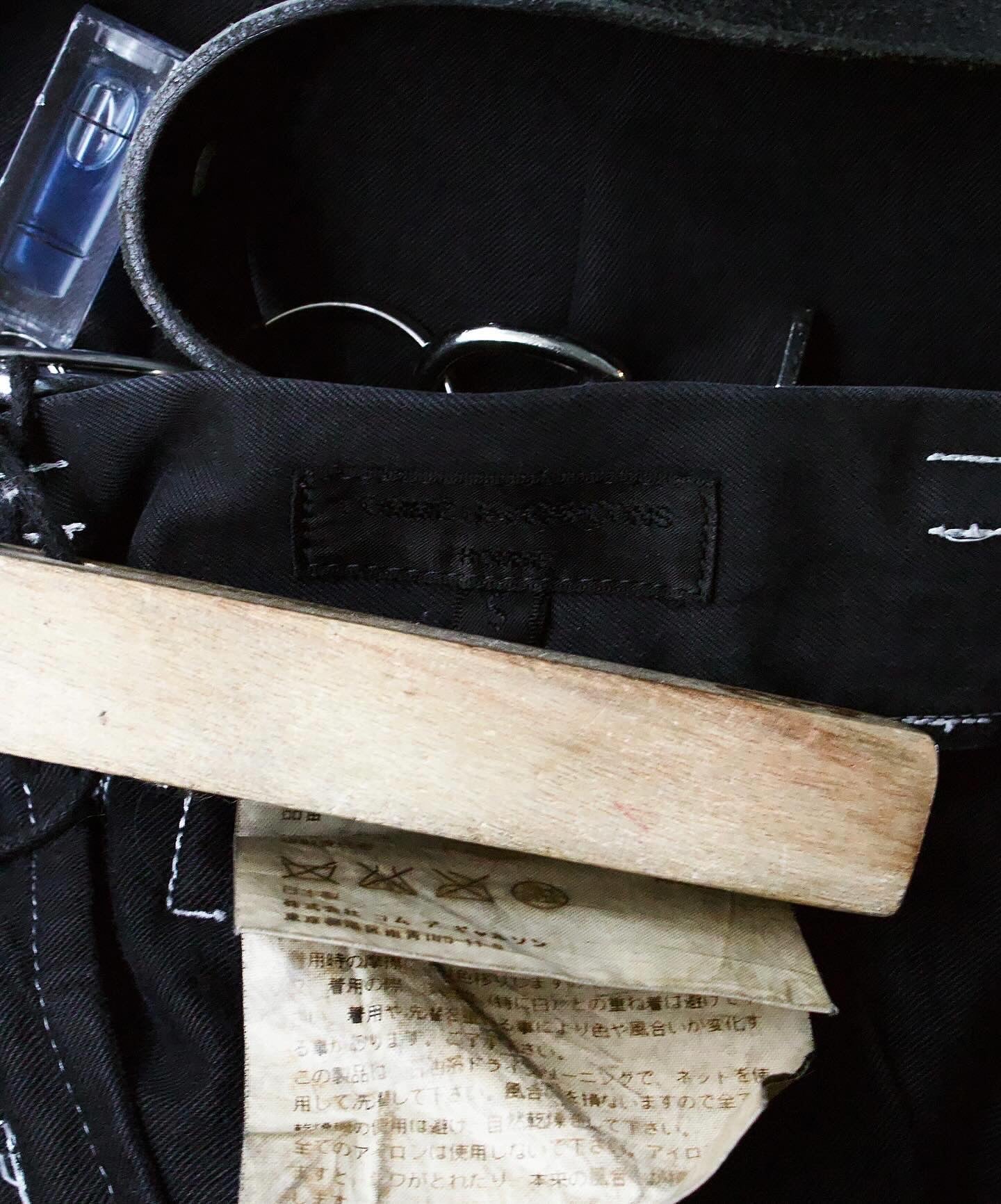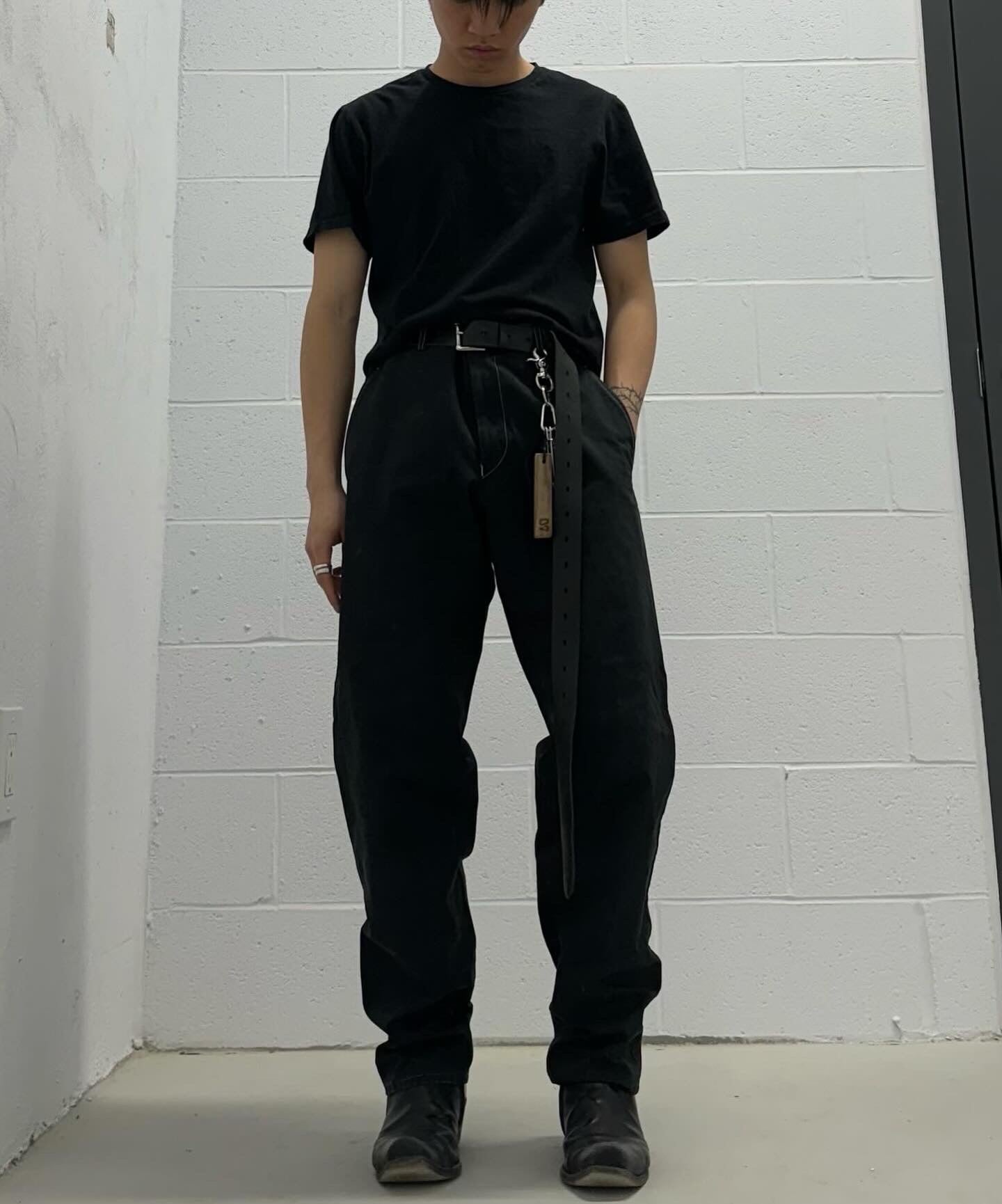


COMME des GARÇONS HOMME AW99 Moleskin Cotton Work Pants
Made in Japan
COMME des GARÇONS HOMME (CdGH) is a menswear line and the first diffusion label within the Comme universe. Launched in 1978, CdGH operates under the guiding ethos of “Good Sense, Good Quality.” Designed by Kawakubo until 2003, the line is now under the purview of her protégé Junya Watanabe. While CdGH is more conservative and traditional than the disruptive Homme Plus line, it still challenges conventional menswear, acting as a buffer between other Comme diffusion lines—like Homme Deux and SHIRT—and the fashion-as-art Homme Plus offering. CdGH is arguably the true menswear center of the Comme universe. Homme Plus, Homme Deux, and Homme SHIRT all technically orbit around Comme des Garçons Homme, which itself offers the most comprehensive and balanced study of menswear among them all. Injected with just enough Comme DNA to differentiate itself from other brands, CdGH still draws on classic menswear elements to offer a cohesive whole that the various sub-brands can’t match independently. These particular pants were produced for Autumn/Winter 1999-2000 by CdGH and are in amazing condition considering they’re more than 20 years old. They were constructed from durable moleskin cotton material that went through a washing treatment to achieve its soft texture and feature contrast stitching throughout and back pockets. These are the perfect pants to elevate your everyday wear.
Size S, fits 30
Condition: 10/10
Vintage, Flawless
Couldn't load pickup availability
About the Brand
About the Brand
Measurements
Measurements
Measurement Guide
Measurement Guide
Every piece is measured by hand, laid flat, in centimetres. Each listing carries its own figures under Measurements. The diagrams below show where each figure is taken.
How we measure
- Pieces are laid flat and smoothed without stretching.
- Figures across the body cover one side only. Double Pit to Pit, Waist, Thigh and Leg Opening for the full circumference.
- Archival sizing differs between designers, seasons and countries. A tagged JP 2 or IT 48 tells you less than the figures do.
- Hand measurements of worn garments can vary slightly. Allow a small margin of error.
Finding your fit
- Choose a piece you own that fits the way you want.
- Lay it flat on a hard surface and smooth it out without stretching.
- Measure it at the points shown below.
- Compare your figures with the listing.
Tops and Outerwear
-
1
Shoulder
Straight across, from one shoulder seam to the other.
-
2
Pit to Pit
Straight across the chest. Double it for the full chest.
-
3
Sleeve Length
From the shoulder seam to the end of the cuff, along the top of the sleeve.
-
4
Length
From the bottom of the collar seam at the back, straight down to the hem.
Short-sleeve and sleeveless pieces follow the same points. Jumpsuits and other one-piece garments are listed as a top half and a bottom half, using this diagram and the next. Raglan shoulders without seams are measured using best judgement according to the piece.
Bottoms
-
1
Waist
Straight across the top of the waistband, edge to edge. Double it for the full waist.
-
2
Rise
From the crotch seam or end up to the top of the waistband, along the front.
-
3
Thigh
Straight across one leg, just below the crotch.
-
4
Inseam
From the crotch seam down the inner leg to the hem.
-
5
Leg Opening
Straight across the hem of one leg, edge to edge.
Drop-crotch pieces carry a long rise and a short inseam. Read the two together. Thigh measurements may vary.
Footwear
-
1
Outsole Length
From the back of the heel to the tip of the toe, along the bottom of the sole.
-
2
Heel Height
From the ground to the top of the heel, at the back.
-
3
Upper Height
From the top of the sole to the top edge of the upper's highest point.
-
4
Tongue Height
From the top of the sole to the top of the tongue, at the side.
-
5
Insole Length
Heel to toe along the insole, taken when the insole is removable.
Outsole length is not foot length; welts and toe shapes add to it. Compare against the outsole or insole of a pair that fits you.
Belts
-
1
Leather Length
From the base of the buckle pin, where it meets the leather, to the tip of the strap.
-
2
Leather Width
Straight across the strap, top edge to bottom edge.
-
3
Leather Thickness
The depth of the leather, shown here at the cut end of the strap.
-
4
Buckle to Hole
From the base of the buckle pin to the centre of a hole. This is the waist the belt closes at on that hole. Listings give the first, middle and last holes.
Buckles, crosses and other hardware are measured at their widest points.
Bags
-
1
Length
Side to side across the front.
-
2
Height
Top to bottom, not including handles.
-
3
Width / Depth
Front to back, across the base.
-
4
Handle Drop
From the top edge of the bag to the inside top of the handle, held upright.
Strap Length is taken end to end at full extension.
Accessories
Hats
-
1
Inner Circumference
Around the inside of the headband.
-
2
Width
Straight across, laid flat.
-
3
Length
From the crown to the edge, laid flat.
Gloves
-
1
Length
From the tip of the middle finger to the edge of the cuff.
-
2
Palm Width
Straight across the palm, below the fingers.
-
3
Opening
Straight across the cuff opening, laid flat.
Rings
-
1
Diameter
Across the inside of the band.
-
2
Circumference
Around the outside of the band.
-
3
Height
Top edge to bottom edge of the band.
Bracelets
-
1
Inner Circumference
Around the inside edge.
-
2
Width
Across the band.
Necklaces
-
1
Chain Drop Length
From the top of the chain to the bottom, laid flat and extended straight.
-
2
Pendant Length
The pendant at its tallest point.
-
3
Pendant Width
The pendant at its widest point.
Eyewear
-
1
Lens Width
Across one lens at its widest point.
-
2
Bridge Width
The gap between the lenses.
-
3
Temple Length
From the hinge to the tip of the arm.
Scarves, ties and other flat pieces are measured for length and width, laid flat. Hardware, pendants and ornaments are measured at their widest points.
Questions about a specific piece? Email support@driewgarments.com with the piece and your own measurements.
To try pieces in person, book a showroom appointment.
Material
Material
Care Guide
Care Guide